

Where Today’s Newcastle Results Appear First and What to Look For
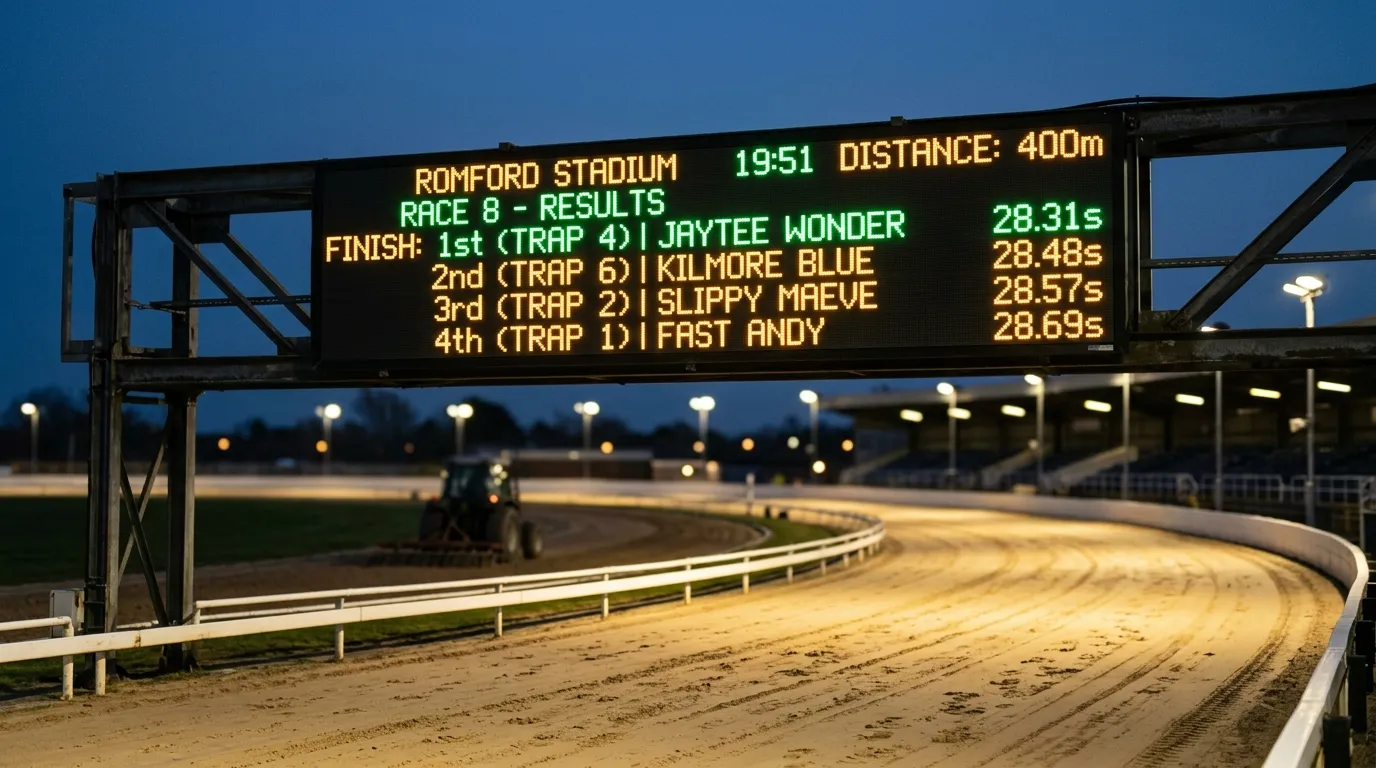
Newcastle greyhound results today are scattered across half a dozen platforms, each updating at a different speed and with a different level of detail. Some show the winner within seconds of the photo finish. Others take twenty minutes to populate full finishing order, sectional times and starting prices. If you are checking results to settle a bet, the speed matters. If you are researching form for an upcoming card, the depth matters more.
The stadium races five days a week — Tuesday mornings from 10:45, Wednesday and Friday afternoons from around 14:00, Thursday evenings from 18:30, and Saturday afternoons. That volume, across a sport that generated 355,682 individual starts on GBGB-licensed tracks in 2024, means results data flows constantly. Knowing where to look and what each source actually delivers saves time and prevents the frustration of half-loaded pages and missing split times.
This guide ranks the main sources by update speed, explains the practical difference between a fast result and a full result, and covers what happens to today’s data once the meeting closes and the archive window opens.
Live Result Sources Ranked by Speed
Not all result services are created equal. The gap between the fastest and slowest can be several minutes per race, and when you multiply that across a twelve-race card, you are either ahead of the market or trailing behind it. Here is how the major sources stack up for Newcastle.
Timeform’s fast results service is typically the first to show a winner. The format is stripped back — just the finishing order, winner’s name, trainer and winning time — but it appears almost immediately after the race closes. For anyone watching via a delayed stream and wanting confirmation before the replay ends, Timeform is the benchmark. Full result detail, including sectional times, starting prices and forecast returns, arrives on Timeform a few minutes later once the official data feed completes.
At The Races provides results through its greyhound track pages. The update speed is close to Timeform’s, and the advantage here is integration with racecards: you can flip between the pre-race form and the final result on the same page without switching tabs. Newcastle’s track page on the platform also carries a basic track guide, which adds context if you are unfamiliar with the venue.
Sky Racing World is worth knowing about if you follow Newcastle results from outside the UK. It aggregates global greyhound racing into a single interface, and Newcastle results are filed under the United Kingdom section. The detail level is strong — finishing positions, dividends, and distance margins all show up — but the update speed can lag behind Timeform by two to three minutes on busy race nights.
The official Newcastle Greyhound Stadium website publishes results as downloadable PDF cards. This is the most complete source: full race details, advanced card data and exact finishing margins. The trade-off is speed. PDF uploads tend to arrive after the entire meeting closes rather than race by race, which makes the official site better suited for post-meeting review than live checking.
Sporting Life and the GBGB results portal round out the main options. Both carry Newcastle results and both are reliable, but neither is notably faster than the sources above. The GBGB portal has a niche use: it is the only source directly linked to the regulator, which means its data carries official status for dispute resolution or record-checking purposes.
Off Track Betting, an American platform, also indexes Newcastle results under the label “Newcastle UK Greyhound.” Payouts are displayed in dollar equivalents, which can cause confusion for UK-based users, but the data itself mirrors the official feed and the archive stretches back months.
Understanding Fast Results vs Full Results
A fast result and a full result serve different purposes, and confusing them leads to bad decisions. A fast result tells you who won and how quickly. A full result tells you why.
Fast results, as the name suggests, appear within seconds of the race finishing. They typically include the finishing order (first, second, third), the winning greyhound’s name, trap number and trainer, and the winning time. Some services also show the starting price and the forecast dividend at this stage. That is enough to confirm a bet or update a running tally, but it is nowhere near enough to assess form.
Full results add the layers that matter for research. Sectional times — the split from trap to first bend and the calculated finishing time adjusted for going — allow you to compare performances across meetings on different days when the track might have been running faster or slower. Bend positions show where each dog was at every turn, revealing whether the winner led throughout or came from behind. Distances between each finisher, measured in lengths, indicate how competitive the race actually was. And the remarks column, with its compressed abbreviations like “Crd” for crowded or “SAw” for slow away, carries the stewards’ real-time account of what happened during the race.
The practical issue is timing. Full results at Newcastle are typically available within five to ten minutes of a race finishing on platforms like Timeform and At The Races. On the official stadium site, you may wait until the end of the meeting for the complete PDF card. If you are doing inter-race research — say, studying the form of a runner in race eight while race six is just finishing — the full results from early races should be available by the time you need them, but only if you are using the faster platforms.
One detail often missed: the calculated time shown in full results is not the same as the raw winning time. Calculated time adjusts for track conditions, which means a 28.80-second run on a slow, rain-soaked surface might calculate to 28.55 once the going allowance is applied. Comparing raw times across meetings without this adjustment is a common mistake and a reliable way to make poor selections.
When Today Becomes Yesterday — Accessing Recent Archives
Today’s results have a short shelf life on most platforms. By midnight, the “today” tab resets, and yesterday’s Newcastle data migrates to an archive section — or, on some sites, disappears behind an extra click. Knowing where each service stores recent results prevents the mild panic of searching for a race that ran six hours ago and finding a blank page.
Timeform maintains a calendar-based results archive. You select the date, choose Newcastle from the track list, and the full card loads with the same detail that appeared on race night. The archive is extensive, stretching back years, and is arguably the cleanest tool for pulling up a specific race by date. At The Races offers a similar calendar, though the depth of archived data varies by track.
The Greyhound Recorder, an Australian-run service, archives Newcastle results going back twelve months. The advantage here is the inclusion of sectional times and bend-position data in the archive view, which some UK platforms strip out after a few days. For form students building a picture of a dog over multiple runs, this is a valuable resource.
Newcastle’s own website keeps downloadable PDF results cards for the past week on its results page. Older results are accessible through a link at the bottom of the page, though the exact depth of the archive is not specified. The PDF format is thorough but not searchable — you cannot type a dog’s name and find its results across multiple meetings, which is a significant limitation for serious research.
The transition from live results to archive happens quietly, and no platform explicitly warns you. The best practice is straightforward: if you need today’s results for post-meeting analysis, save or screenshot the data before the meeting closes. If you miss that window, Timeform and the Greyhound Recorder are your most reliable fallback options, with the former offering the fastest retrieval and the latter offering the deepest data layer for Newcastle specifically.
The wider context is set out in our Newcastle dog results guide.
Anything older sits in the race archive.
