

What to Know Before Your First Trip to Newcastle Dogs
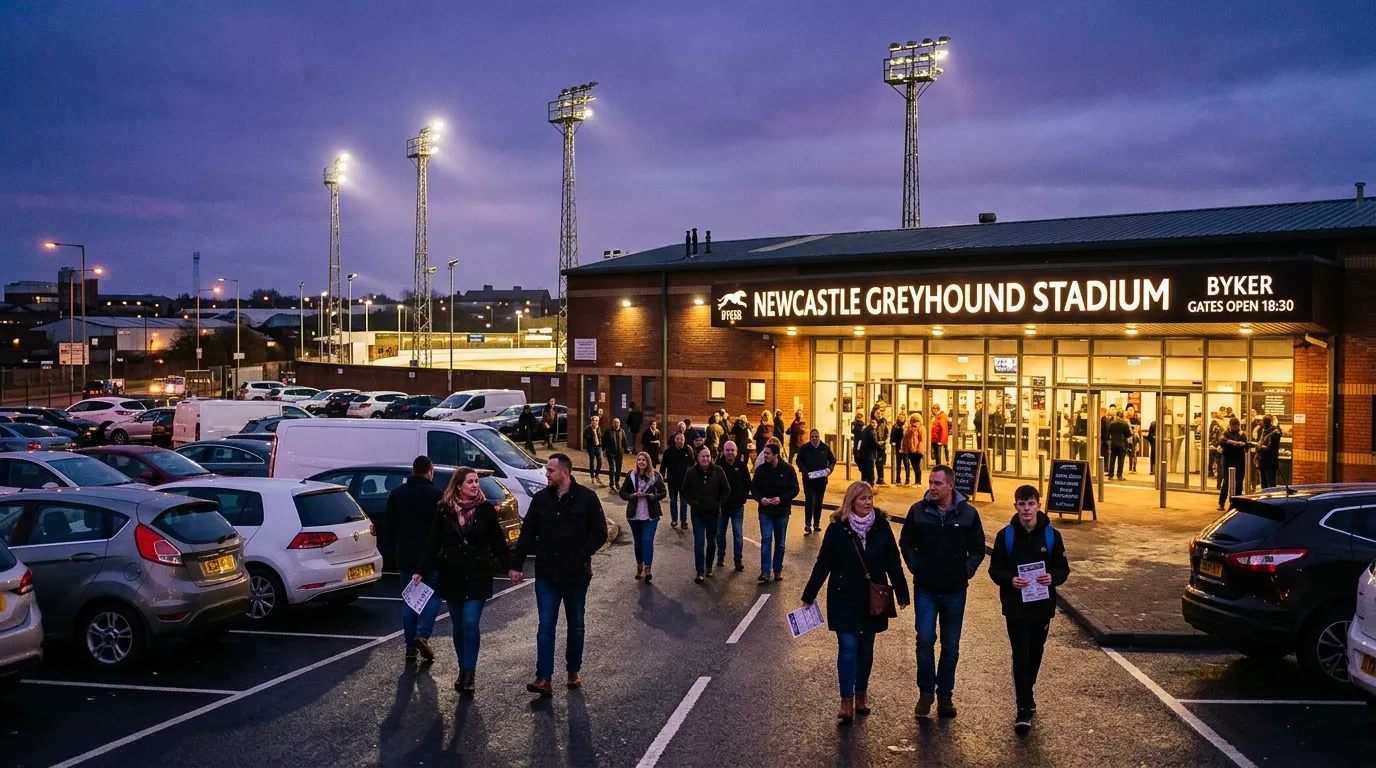
Newcastle greyhound stadium is one of those venues that people discover almost by accident — a birthday outing, a work social, a mate who swears the dogs are better craic than the cinema — and then wonder why they did not go sooner. The stadium sits on the Fossway in Byker, a ten-minute drive from the city centre, and it has been putting on greyhound racing since the late 1920s. The surroundings are industrial rather than glamorous, and the building makes no attempt to pretend otherwise. What it delivers is an evening — or a morning, or an afternoon — of fast, noisy, unpredictable sport at a price that makes most other nights out look extravagant.
The numbers confirm the trend. Arena Racing Company, which operates Newcastle alongside a network of greyhound and horse-racing venues, reported a 5 per cent year-on-year increase in greyhound stadium footfall across its sites in 2025. That is not a heritage-brand dying quietly. That is a leisure product gaining ground in a market where every competitor — bowling, cinema, darts, escape rooms — is fighting for the same disposable pound.
“Competition for the leisure pound has never been higher, so to grow our footfall in 2025 is a great achievement,” said Sarah Newman, Marketing and Communications Manager at Arena Racing Company. “We know greyhound racing is a fantastic and cost-effective night out for people of all ages, families, groups of friends and colleagues.”
This guide covers everything you need to plan a visit to Newcastle greyhound stadium: the weekly schedule, ticket options, how to get there, what to eat, and the practical details that first-timers always wish they had known in advance.
Weekly Fixtures and Race Times
Newcastle stages greyhound racing five days per week. The regular pattern is: Tuesday morning (doors at 10:30, first race at 11:09), Wednesday afternoon (doors at 13:30, first race at 14:29), Thursday evening (doors at 17:30, first race at 18:37), Friday afternoon (doors at 13:30, first race at 14:36), and Saturday afternoon (doors at 13:30, first race at 14:28). This schedule makes it one of the busiest tracks in the north of England, and it means there is almost always a meeting within a day or two of whenever you decide to go.
The morning and afternoon meetings are BAGS fixtures — races contracted through the Bookmakers’ Afternoon Greyhound Service, which supplies the content that betting shops and online bookmakers broadcast and take bets on throughout the day. These are working meetings rather than showcase events. The crowd is smaller, the atmosphere is functional, and the racing is steady. If you are visiting for the first time and want the full experience — the noise, the crowd, the trackside energy — the Thursday evening or Saturday card is the better choice.
Thursday evenings are Newcastle’s flagship regular meeting. The card typically runs twelve races, the restaurant is open, and the stadium has the buzz of a genuine night out. Saturday meetings draw families and social groups alongside the regular betting crowd, and the atmosphere tends to be more relaxed. Both are good entry points for first-timers.
Special fixtures — open races, graded events, and the marquee All England Cup night — are scheduled on top of the regular programme and are usually advertised in advance through the stadium’s website and social media. These nights attract bigger fields, better dogs, and significantly larger crowds. If you want to experience Newcastle greyhound stadium at its loudest, check the fixture list for upcoming feature meetings.
One practical detail: race times can shift by a few minutes depending on the card length and any delays (a dog withdrawn at the last moment, a hare malfunction, weather interruption). Arrive fifteen to twenty minutes before the advertised first-race time to give yourself time to get through the turnstiles, find a seat, and study the card before the action starts.
Ticket Types, Prices and Online Booking
Newcastle greyhound stadium offers several tiers of admission, from basic general entry through to full restaurant packages. Prices vary depending on the meeting type and the time of week, so always check the stadium’s official website for the most current figures before you go.
General admission — often called a “standard racecard entry” — gets you through the door, a printed racecard, and access to the trackside viewing areas and bars. This is the cheapest option and is perfectly adequate for a casual visit. You can stand at the rail, watch the racing, place bets at the on-course bookmakers or Tote windows, and buy food and drinks from the bars. For most first-timers, this is the natural starting point.
Restaurant packages bundle admission with a meal — typically a two- or three-course dinner served in the stadium’s main restaurant, which overlooks the track. These packages are popular for group bookings: birthday parties, work nights out, hen and stag events. The restaurant seats fill up on Thursday evenings and Saturdays, so booking in advance is advisable. Arena Racing Company’s “Back On Track” promotional campaign, which offered a 25 per cent discount on selected packages, generated a 33 per cent uplift in online bookings and a 28 per cent increase in restaurant reservations across its greyhound venues in the final quarter of 2025. The success of that promotion confirmed something the stadium already knew: people want the dining experience, and price sensitivity is real. Look out for similar offers on the website — they recur regularly.
VIP and private-box options exist for corporate groups and larger parties. These include dedicated seating, table service, a reserved betting area, and sometimes a private balcony with a trackside view. Availability is limited and these packages need to be booked well in advance, particularly for feature nights.
Online booking is the most reliable way to secure tickets for popular meetings. The stadium’s website handles reservations for restaurant packages and general admission, and third-party platforms occasionally list tickets as well. Booking online also tends to offer a small saving compared to paying on the door, and it guarantees you a spot if the meeting is busy.
A word on racecard pricing: the racecard is usually included in the admission price or available for a small additional charge. It is worth having. Even if you are not betting, the card tells you the names, traps, and form of the dogs, which makes the racing infinitely more engaging than watching six anonymous blurs chase a mechanical hare.
Getting There: Car, Metro, Bus and Parking
Newcastle greyhound stadium sits on the Fossway in Byker, postcode NE6 2XJ. It is east of the city centre and well connected by road, though it is not the easiest venue to reach by public transport after dark. Here are your options.
By car, the stadium is roughly ten minutes from Newcastle city centre via the A186 or the A193. If you are coming from the A1 or the Tyne Tunnel, follow signs for Byker and then the Fossway — the stadium is clearly signposted once you are in the area. Parking is available on site. The car park is free on most meeting nights, though it fills up quickly on busy evenings, particularly Thursday nights and feature meetings. Arrive early if you want a spot close to the entrance. Overflow parking is available on surrounding streets, but lighting is limited, so keep valuables out of sight.
By Metro, the nearest station is Byker, which is on the green line and about a fifteen-minute walk from the stadium. The walk is straightforward in daylight but less appealing on a dark winter evening — the route passes through residential streets that are not always well lit. Manors station, on the same line, is a similar distance. If you are travelling by Metro, consider timing your arrival for before sunset, or budget for a short taxi from the station.
By bus, several services run along the Fossway and Shields Road, with stops within a few minutes’ walk of the stadium. Check the Nexus journey planner for the most up-to-date routes and times. Bus services thin out after 23:00, so if you are staying for the last race on a Thursday evening, confirm your return route before you go.
By taxi, the stadium is a straightforward fare from the city centre — expect to pay between £7 and £12 depending on the time and traffic. On busy nights, the stadium sometimes has a dedicated taxi rank or pre-booked collection point. Ask at reception if you need to arrange a ride home after the last race.
One tip for drivers: the Fossway can be congested during rush hour. If you are heading to a Thursday evening meeting straight from work, build in an extra fifteen minutes. Missing the first race because you were stuck behind a bus on Shields Road is not the end of the world, but it is mildly irritating when you had a fancy for the trap 2 dog in the opener.
For visitors coming from further afield — Sunderland, Durham, the Northumberland coast — the A19 and A1 both connect to the Byker area with reasonable ease. Journey times from Sunderland are typically around thirty minutes; from Durham, closer to forty. The stadium’s postcode works reliably in sat-nav systems, so plug in NE6 2XJ and follow the directions once you leave the main road.
Restaurant, Trackside Packages and Group Bookings
The restaurant at Newcastle greyhound stadium is the main draw for group bookings and the reason many people come back. It is not fine dining — nobody is pretending otherwise — but it is a well-organised package that combines a meal with live racing, and for the price, it is hard to beat as a group night out.
A standard restaurant package includes a reserved table with a view of the track, a two- or three-course meal (menus vary by meeting), a racecard, and general admission. Some packages add a welcome drink or a free bet voucher. The food is crowd-friendly: steaks, burgers, fish, vegetarian options, and a dessert menu. Dietary requirements can usually be accommodated if you notify the stadium when booking. The meal is served before racing or between early races, so you eat first and then move to the trackside or stay at your table to watch through the restaurant windows.
Group bookings — ten people or more — unlock additional options. The stadium can arrange private areas, customised menus, dedicated hosting, and add-ons like race naming (more on that below). Birthday groups often get a mention on the tannoy, which adds to the atmosphere without costing extra. Hen and stag parties are a regular fixture on Thursday and Saturday nights; the stadium is experienced at managing them and will advise on the best package for the group size.
Trackside packages are a step above the restaurant. They place you closer to the action — often in a private booth or raised area adjacent to the finishing line — with table service and a more premium food-and-drink offering. These sell out fastest for feature meetings and need to be booked weeks in advance.
Outside the restaurant, the stadium’s bars serve the usual range of draught and bottled beers, wines, spirits and soft drinks. Prices are on par with pub prices in Byker — you are not paying West End premiums. Food counters offer hot dogs, pies, chips and the kind of quick-service fare you would expect at any sporting venue. It is functional, it is warm, and it fills a gap between races without requiring a booking.
Families and Accessibility
Greyhound racing is one of the few live sports where children are genuinely welcome and genuinely entertained. The races are short, the dogs are visible from the stands, and the gaps between races are long enough for a child to run around, eat a hot dog, and ask “which one’s the fastest?” approximately forty times before the next off. Newcastle greyhound stadium accommodates families on most meeting days, though the evening sessions — particularly Thursday nights — tend to be more adult-oriented as the evening progresses.
Children under a certain age are admitted free or at a reduced rate (check the stadium’s website for the current policy). There is no dedicated children’s play area, but the open viewing areas and the trackside offer enough space for younger visitors to watch the racing without being stuck in a seat for two hours. The atmosphere at afternoon meetings — Wednesdays, Fridays and Saturdays — is relaxed enough that families with young children will feel comfortable.
If you are bringing children, the afternoon meetings are the best fit. The races finish by late afternoon, the crowd is smaller and calmer, and the pace of the event is gentle enough that kids can drift between watching the dogs, eating chips, and asking endless questions about why the dogs wear coloured jackets. The racing itself is a natural conversation starter — even very young children grasp the basic excitement of six animals running very fast in a circle, and the short race duration means their attention span is never tested beyond about thirty seconds at a time.
For teenagers, the betting element is off limits — you must be 18 to place a bet — but the racing, the food, and the general atmosphere are perfectly accessible. Some families treat the dogs as an introduction to sport and probability, letting older children pick a dog to support in each race without any money changing hands. It is a surprisingly effective way to teach the concept that predictions are hard and certainty is rare.
For accessibility, the stadium has ground-level access to the main viewing areas and the restaurant, which makes it manageable for wheelchair users and those with limited mobility. The trackside viewing area is largely flat. Disabled parking bays are available close to the main entrance. If you have specific accessibility needs, call the stadium in advance — the staff are accustomed to accommodating requests and can advise on the best seating positions and facilities.
Hearing loops and other assistive equipment may be available on request. The stadium’s public address system handles race commentary and announcements, so visitors with hearing difficulties should enquire about amplified options when booking.
Sponsoring a Race at Newcastle
Race sponsorship is one of those options that sounds corporate but is actually accessible to almost anyone. At Newcastle greyhound stadium, you can sponsor an individual race on the card — meaning the race is named after you, your company, or your event — for a relatively modest fee. The package typically includes your name on the racecard, a mention on the tannoy before and after the race, a photograph with the winning dog in the presentation area, and sometimes a trophy or memento to take home.
For businesses, sponsoring a race is a low-cost marketing exercise with a captive audience. Everyone at the stadium that night sees the race name, hears the announcement, and associates your brand with a specific moment of the evening. For individuals, it is a memorable way to mark a birthday, an anniversary, a retirement, or any occasion that deserves something more original than a meal and a card.
The economics of race sponsorship make more sense when you see the audience figures. Newcastle’s All England Cup final night in 2025 drew an 85 per cent year-on-year increase in footfall — a feature night that demonstrated the stadium’s pulling power at its peak. Regular meetings attract more modest numbers, but even a midweek BAGS meeting has a live audience of spectators and an extended audience of punters following on television, streaming platforms and betting apps. Your race name travels further than the stands.
To sponsor a race, contact the stadium’s events team through the website or by phone. Availability varies — popular nights and feature meetings book up early — and prices depend on the meeting type and the race slot. It is worth enquiring several weeks before your preferred date.
Practical Tips for a Great Night Out
Dress code: there is not one. Newcastle greyhound stadium is casual. Jeans, trainers, a decent jacket — you will fit in. The restaurant packages do not require formal wear, though some groups like to dress up for the occasion, which is perfectly fine. The trackside areas are outdoors, so in winter, bring a coat. The wind coming off the industrial estates around Byker is not kind to anyone in a thin shirt.
Cash or card: the stadium accepts card payments at bars, food counters and the Tote windows. On-course bookmakers in the ring traditionally prefer cash, though some now accept contactless. If you plan to bet with the trackside bookies, bring at least some cash to avoid queuing for a cashpoint on the premises.
Betting budget: decide what you are willing to spend before you arrive and stick to it. A reasonable budget for a casual evening — covering a few small win bets and a forecast or two — might be £20 to £30. You can spend more, but you can also spend nothing on betting and still enjoy the evening. There is no minimum bet requirement for spectators, and nobody will judge you for watching without wagering.
Racecard study: if you want to bet, arrive early enough to read the card before the first race. The racecard is your cheat sheet — it tells you which dogs to watch and which to avoid. Ten minutes with the card and a pen is worth more than any tip from a stranger at the bar.
Between races: the gap between races is usually seven to ten minutes. That is long enough to visit the bar, check the card for the next race, and get back to the rail. It is not long enough for a full meal, so if you are doing the restaurant package, plan to eat before racing starts or during the early races.
Last race timing: the last race on a Thursday evening is typically around 21:45. On afternoon meetings, the card finishes earlier, usually by 17:00 to 18:00. Plan your transport accordingly — the car park empties quickly after the final race, and taxis can be harder to find if you leave it ten minutes after the last dog crosses the line.
Above all, treat your first visit to Newcastle greyhound stadium as an experience rather than a mission. The racing is fast, the atmosphere is friendly, the food is decent, and the cost of entry is lower than almost any comparable night out in the city. If you leave having had a good evening, you are already ahead — regardless of what the dogs did.
The full picture is in our Newcastle dog results guide.
Dining is covered separately in the restaurant guide.
