

The Benchmarks Against Which Every Newcastle Runner Is Measured
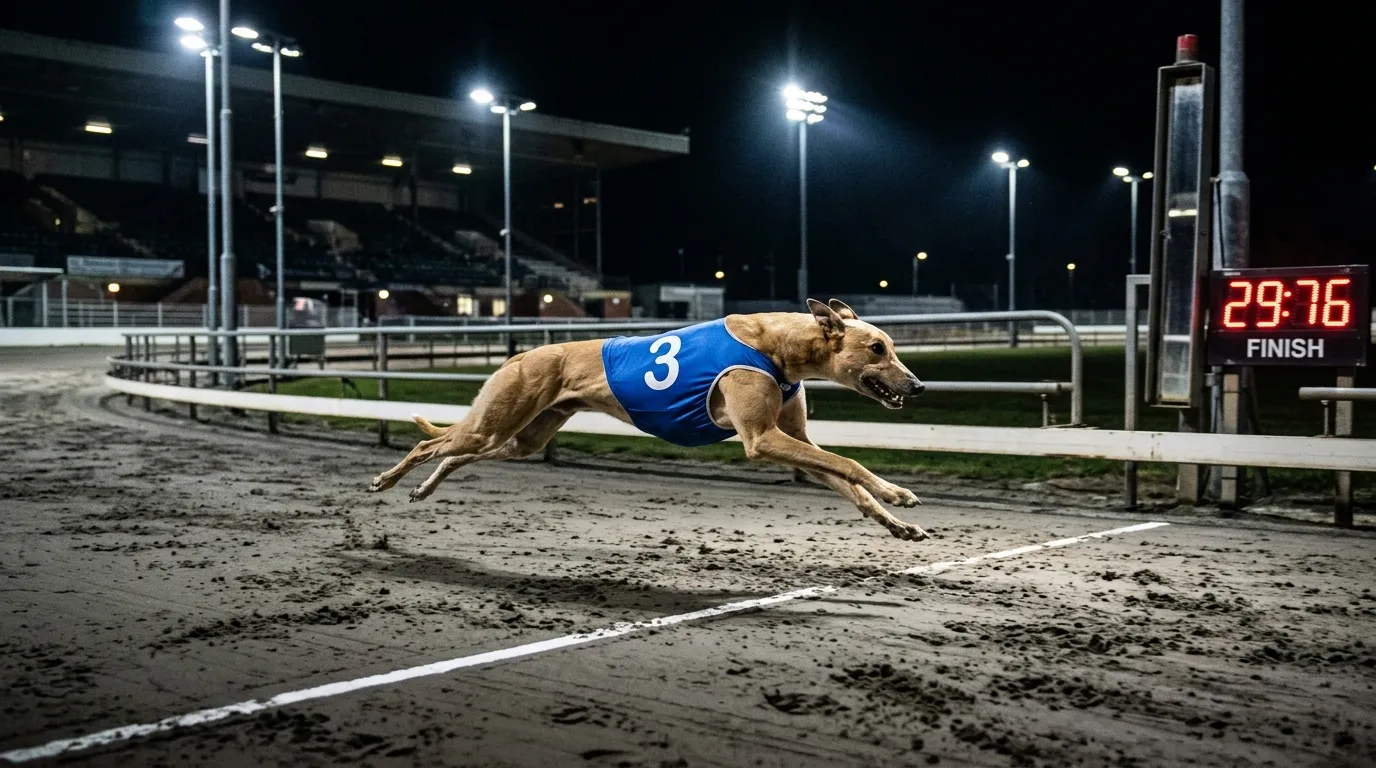
Newcastle greyhound track records are the fixed points in a sport where everything else moves. Dogs come and go, trainers change, the sand gets resurfaced, the weather shifts from one week to the next — but the fastest time ever recorded over each distance at this stadium remains on the books until someone runs faster. That permanence gives track records a gravitational pull. Punters use them as reference points, trainers use them as targets, and the racing office uses them as indicators of a meeting’s overall speed. When a dog runs within a few hundredths of the record, it signals something worth noticing.
The first race at Newcastle — then called Brough Park — was run on 23 June 1928, won by a greyhound named Marvin at odds of 3/1. The track records set in those early years bear no relation to modern times: the surface was grass, the distances were measured in yards, and the timing technology was rudimentary by current standards. Today’s records are products of a 415-metre sand circuit using a Swaffham hare and electronic timing accurate to hundredths of a second. They represent genuine peak performance under standardised conditions.
Track Records by Distance
Newcastle races over six distances: 290 metres, 480 metres, 500 metres, 640 metres, 706 metres and 895 metres. Each distance has its own track record, and the gaps between them reflect more than just the additional distance — they reflect different running dynamics, different types of dog, and different tactical challenges.
The 290-metre sprint is the shortest distance on the card and produces the fastest per-metre speeds. Sprint records at Newcastle tend to be set by greyhounds with explosive trap speed and the acceleration to reach full velocity before the first bend. The margin for error is minimal: a slow start in a sprint is almost always fatal to the result, which means sprint records are typically set by dogs that break cleanly, lead at the first bend, and maintain their speed without interference. The record time reflects a near-perfect run rather than a sustained battle.
The 480-metre trip is the standard middle distance and the most frequently raced at Newcastle. The track record over this distance is the most scrutinised number in the building, because the 480 is the distance over which most dogs at the stadium compete every week. When a graded dog runs within half a second of the 480-metre record, it is either an exceptionally fast surface or an exceptionally good dog — and the calculated time, which adjusts for going, helps you distinguish between the two. A raw time close to the record on a fast track is less impressive than the same time on a standard or slow surface.
The 500-metre distance is a marginal extension of the 480, with an extra twenty metres changing the start position and the angle of approach to the first bend. The 500-metre record exists as a separate benchmark because the altered geometry affects split times and running lines differently enough to warrant its own standard. In practice, most form students treat 480-metre and 500-metre form as broadly comparable but not identical.
Over 640 metres, the character of the race changes substantially. The extra distance introduces two additional bends and requires stamina that the shorter trips do not test. The 640-metre track record is held by a dog with a different profile from the sprint record-holder: a mid-distance specialist with the endurance to sustain speed through six bends and the tactical intelligence to conserve energy in the early stages. Records over this distance tend to stand longer than sprint records because the confluence of speed, stamina and a clean run is harder to achieve.
The 706-metre and 895-metre distances are the staying trips at Newcastle. They appear less frequently on graded cards — stayers are a minority of the racing population — and the track records over these distances are set by genuine distance specialists. The 895-metre record, in particular, represents a rare combination of elite stamina and sustained pace over more than two full laps of the circuit. These records attract less public attention than the 480-metre mark but are prized within the sport as indicators of exceptional athletic ability.
What Track Records Tell You (and What They Don’t)
A track record confirms that a specific time is achievable at Newcastle under the right conditions. That confirmation is valuable as a calibration tool: if a dog runs 28.60 over 480 metres and the track record is 28.10, you know the dog is half a second off the best ever recorded and can position its performance accordingly. Without the record as a reference, the time is just a number with no context.
What track records do not tell you is how the surface was running on the day the record was set. A record established on a fast, dry, mid-summer evening may represent a slightly less impressive athletic effort than a time one-tenth of a second slower set on a slow, wet January afternoon. The calculated time helps bridge this gap, but most published track records list the raw time rather than the adjusted figure, which means the official record may have been achieved with a favourable going allowance.
Track records also reflect the quality of greyhounds that have raced at the venue over its history. Newcastle, as a Category One host through the All England Cup, attracts top-class open-race entrants from across Britain. Many track records at GBGB stadia are set by open-race dogs rather than locally graded runners, which means the record may represent a level of ability that graded racing does not routinely produce. Comparing a Tuesday-morning graded runner’s time to the track record is informative as a ceiling benchmark, but expecting a mid-grade dog to approach the record is unrealistic.
The most practical use of track records is relative rather than absolute. A dog that runs within five per cent of the record over its distance is performing at a high level. A dog within two per cent is exceptional. Tracking how close individual runners come to the record, race by race, gives a proxy for track speed on any given day — if several dogs record times well below their usual standard across an entire meeting, the surface is likely running fast, and the results should be interpreted accordingly.
Notable Near-Record Performances
Near-misses at Newcastle generate their own folklore. A trial run that clips the split record by four hundredths of a second, as happened when Wicky Ned trialled over 480 metres ahead of the 2024 All England Cup, produces a wave of expectation that ripples through the ante-post market. Trial times are not competitive — the dog runs alone against the clock — but when a trial produces a time in the vicinity of the track record, it confirms that the dog is in peak physical condition and that the surface is receptive to fast running.
Open-race finals are the settings where track records are most likely to fall. The combination of top-class dogs, a well-prepared surface and the competitive intensity of a final produces conditions that graded racing rarely replicates. The All England Cup final at Newcastle has historically been a lightning rod for fast times, with the best greyhounds from across Britain stretching for the line in front of increasingly large crowds — attendance on finals night rose eighty-five per cent year-on-year in 2025.
For punters, near-record runs carry actionable information. A dog that recorded a near-record time in a trial or an early-round heat is likely to attract significant market support in subsequent rounds. The question is whether the time reflected the dog’s ability or the track conditions that day. Checking the times of other runners at the same meeting answers this: if several dogs posted fast times, the surface was doing the work. If only one dog was close to the record while the rest ran normal times, the performance was individual and the market interest is justified.
The wider context is set out in our Newcastle dog results guide.
Conditions move those times: the going report.
