
Thousands of Greyhounds Retire Every Year — Here’s How to Give One a Home Near Newcastle
Retired greyhound adoption in Newcastle connects two realities that exist in the same city. At the stadium on the Fossway, greyhounds race five days a week, generating results, sectional times and betting turnover. A few miles away, in homing centres and foster homes, ex-racers that have finished their competitive careers are waiting for someone to take them home. The GBGB’s 2024 data shows that 94 per cent of retired greyhounds are successfully rehomed — a figure that has risen from 88 per cent in 2018. In the same year, just three greyhounds were put to sleep for economic reasons, down from 175 six years earlier. The system is working better than it used to. It is still not working perfectly.
Lisa Morris-Tomkins, Chief Executive of the Greyhound Trust, has been direct about the gap that remains: “The number of racing greyhounds who never have the opportunity to experience a loving home when their racing career is over is unacceptable, and the baseline injury and retirement figures published must be improved.” That assessment predates the most recent improvements in the data, but the underlying point stands — every greyhound that retires from racing needs somewhere to go, and the system depends on people willing to open their homes.
If you are in the Newcastle area and considering adoption, the process is more structured than a typical dog rescue and more rewarding than you might expect from a breed whose reputation for laziness is, for once, entirely accurate.
The Adoption Process: From Track to Sofa
A greyhound’s journey from racing to retirement begins when its owner or trainer submits a retirement form to the GBGB. The dog is assessed — physically and behaviourally — before being passed to an approved homing organisation. The Greyhound Retirement Scheme, introduced in 2020, ensures that the financial cost of this transition is covered by a bond lodged before the dog was registered to race. In practice, this means the homing centre receives funding to cover the dog’s stay, veterinary checks and any necessary treatment before it is matched with a new owner.
The adoption process at most homing centres follows a standard pattern. You complete an application form describing your home environment — garden size, fencing, other pets, children, working hours. The centre uses this information to match you with a greyhound whose temperament and needs suit your circumstances. Not every greyhound is suitable for every home: some dogs are cat-friendly, others are not. Some are comfortable around small children, others prefer quieter households. The matching process is deliberate, not rushed, because the success of the placement depends on getting the fit right.
A home visit typically follows the application. A volunteer from the homing centre visits your property to check that the garden is securely fenced — greyhounds can jump higher than many people realise, and they can accelerate through a gap in a hedge before you have time to react. The visit also assesses whether the living space is suitable and whether any existing pets are likely to coexist peacefully with a greyhound.
Once approved, you meet available dogs at the centre or, in some cases, at a foster home. The introduction is usually relaxed — greyhounds are not typically anxious or aggressive with strangers, and most will approach you with a calm curiosity that bears no resemblance to their behaviour at the track. Adoption fees vary by centre but typically cover the cost of neutering, microchipping, vaccinations, dental work and worming treatments. The fee represents a fraction of the veterinary investment the centre has already made in the dog.
Homing Centres Near Newcastle
The Greyhound Trust operates a national network of branches, several of which cover the North East of England. The Trust handles close to seventy per cent of all greyhounds passed to homing organisations nationally, making it the largest and most established route to adoption. Its branches manage their own waiting lists and match dogs to approved adopters within their geographic area. Contacting the nearest Greyhound Trust branch is the most direct way to start the adoption process.
Regional and independent rescues supplement the Greyhound Trust’s work. These smaller organisations often specialise in greyhounds that need additional rehabilitation — dogs recovering from injuries, dogs with behavioural challenges that require experienced handlers, or dogs that have been waiting longer than average for a placement. The quality of care varies between independents, as it does in any sector of animal rescue, but the best are run by people with deep knowledge of the breed and strong relationships with the local racing community.
Newcastle Greyhound Stadium itself has a welfare and rehoming function within its racing operation, working with the GBGB’s retirement framework to ensure that dogs leaving its trainers’ kennels are processed through approved channels. The stadium’s website and social media occasionally feature dogs available for rehoming, and the staff can direct enquiries to the appropriate homing organisation.
Waiting times fluctuate. During periods of high retirement volume — after major competitions end or when a kennel reduces its numbers — more dogs enter the system than the centres can immediately place. The cost-of-living crisis has added pressure, with some centres reporting reduced charitable donations and a slowdown in adoption enquiries. If the dog you want is not immediately available, most centres operate a waiting list and will contact you when a suitable match arrives.
What to Expect Living with an Ex-Racer
The single most common misconception about retired greyhounds is that they need endless exercise. They do not. A racing greyhound’s life is built around short, intense bursts of speed followed by extended rest. That rhythm carries over into retirement. Two moderate walks a day — twenty to thirty minutes each — are sufficient for most ex-racers. The rest of the time, they will sleep. Greyhounds are among the most sedentary dog breeds in domestic settings, which makes them unexpectedly well-suited to flat living and to owners who work standard hours.
The adjustment period is real but manageable. An ex-racer has spent its life in a kennel environment with structured routines, limited exposure to household objects and no experience of stairs, glass doors, mirrors or television. The first few weeks involve a dog that is discovering its new world: the sofa is confusing, the vacuum cleaner is terrifying, and the cat is either fascinating or prey depending on the dog’s temperament and the centre’s assessment. Patience during this period pays compound returns. Within a month, most greyhounds are fully settled and operating as though they have lived in a house their entire lives.
Health considerations are breed-specific. Greyhounds have thin skin that tears more easily than thicker-coated breeds, lean body mass that makes them sensitive to cold, and a unique blood chemistry that affects how some anaesthetics and medications are metabolised. Any vet treating an ex-racing greyhound should be aware of these breed-specific factors — and most are, given the volume of retired racers now in domestic settings across Britain. Dental health is a common issue: racing greyhounds are fed soft diets that do not clean teeth the way kibble does, and many arrive at homing centres needing dental work. This is usually addressed before adoption, but ongoing dental care is part of the package.
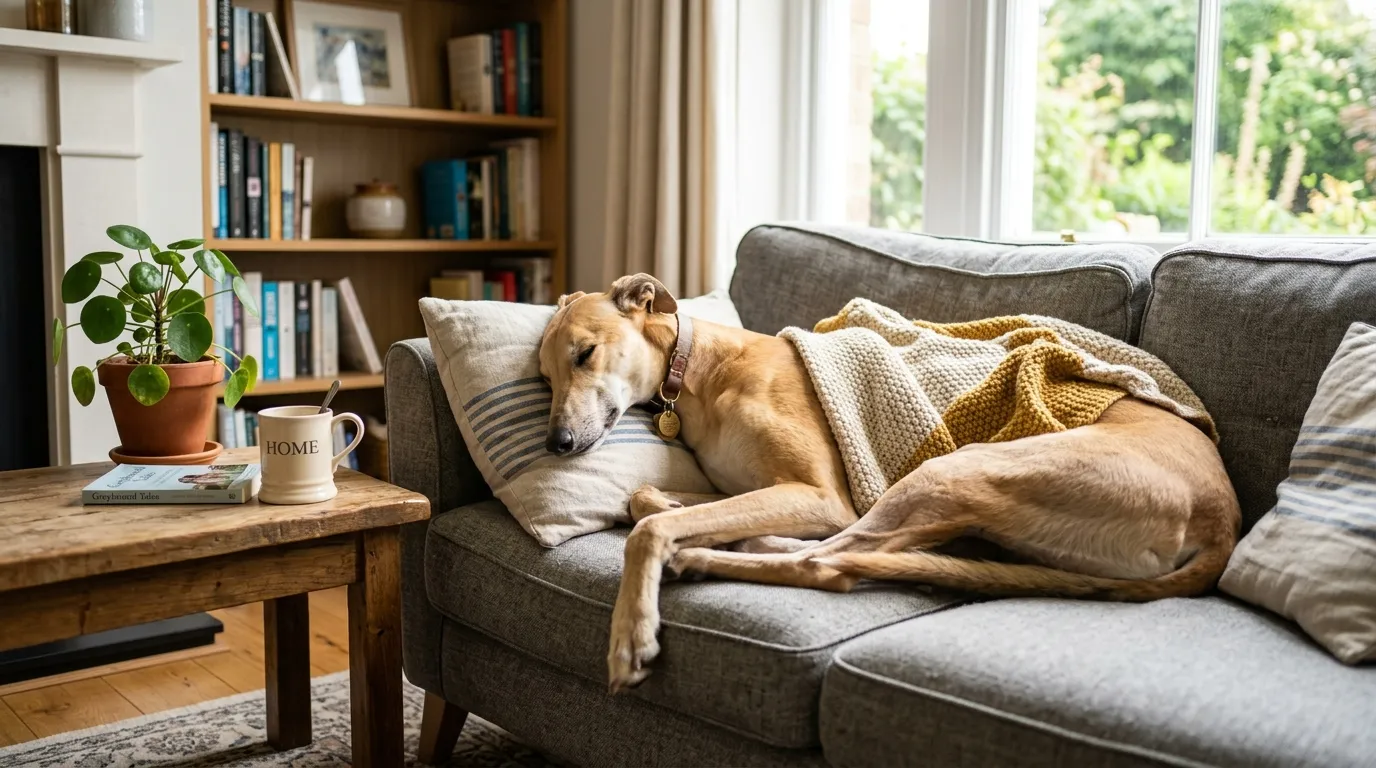
The return on adoption is disproportionately high. Greyhounds are quiet, gentle, affectionate and undemanding. They do not bark much, they do not destroy furniture, and they do not require the relentless stimulation that working breeds demand. What they do require is a warm bed, consistent meals, a secure garden, and a person who understands that the fastest dog in the house would rather be asleep on the sofa than running anywhere at all.
The wider context is set out in our Newcastle dog results guide.
