
A Sport Born in Manchester in 1926 Marks a Century Amid Bans, Closures and Sold-Out Finals
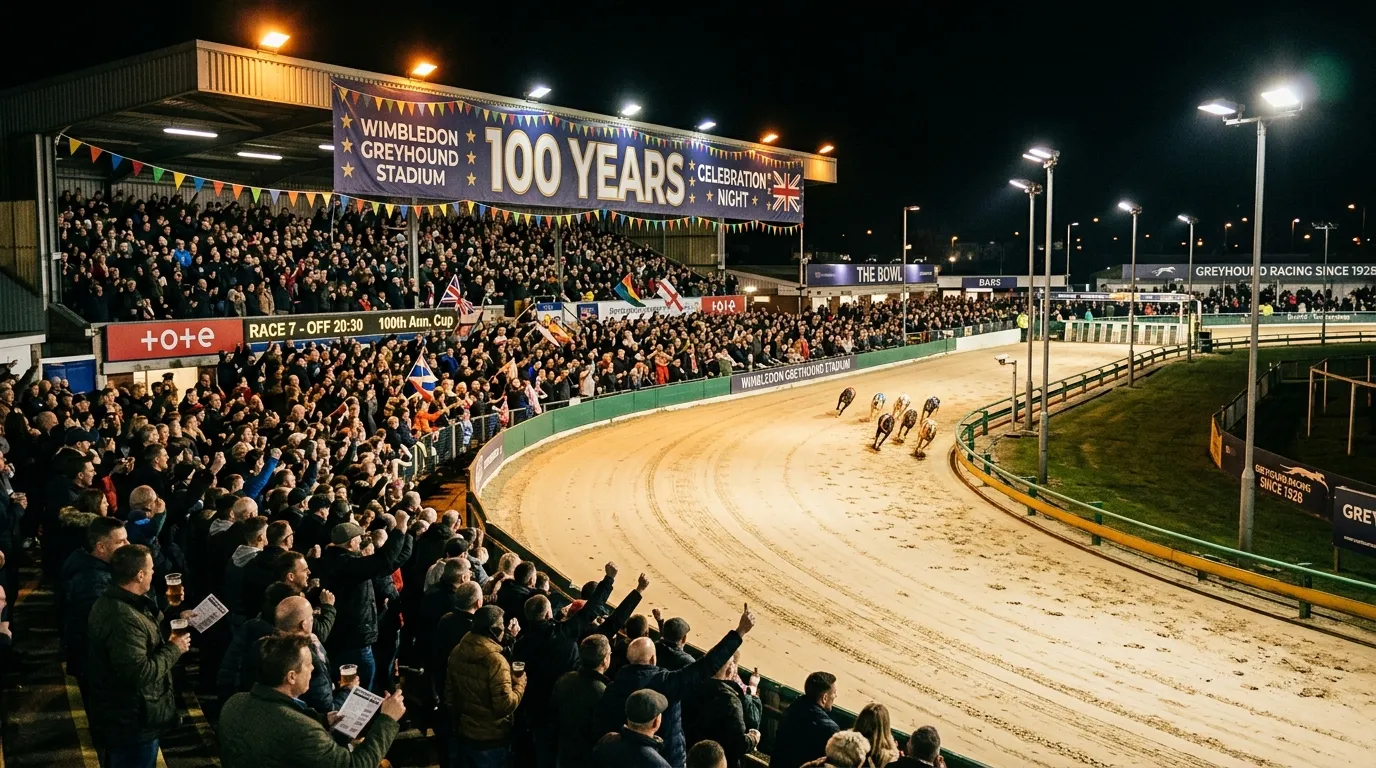
The greyhound racing centenary in 2026 arrives with the peculiar timing that history occasionally arranges. One hundred years after the first modern oval-track race drew crowds to Belle Vue in Manchester, the sport is simultaneously celebrating its survival and defending its existence. Wales is legislating a ban. Scotland has passed a prohibition bill through its first parliamentary stage. New Zealand is phasing out the sport entirely. And yet the eighteen GBGB-licensed stadiums that remain in England and Wales are planning a year of centenary events, with the Greyhound Board of Great Britain coordinating celebrations that include social media campaigns, exhibitions and a special dinner at Dunstall Park — the first brand-new greyhound track built in Britain in more than a decade.
The juxtaposition is stark but not incoherent. A sport can be both declining and alive. Britain once had more than seventy-seven licensed greyhound stadiums; it now has eighteen. The number of countries permitting commercial greyhound racing has fallen to fewer than ten. But the tracks that remain are drawing larger crowds at their flagship events, recording their best-ever welfare data, and operating under a regulatory framework that did not exist for most of the sport’s history. The centenary is not a funeral. It is an anniversary observed by a sport that knows it is smaller than it was and is not entirely certain how much smaller it will get.
The Belle Vue Night That Started It All
Modern greyhound racing — the oval-track format with a mechanical hare that defines the sport today — began at Belle Vue Stadium in Manchester on 24 July 1926. The event was organised by an American, Owen Patrick Smith, who had developed the mechanical lure system in the United States and brought the concept across the Atlantic. The inaugural meeting drew a crowd of 1,700, modest by the standards the sport would soon set but remarkable for a completely new form of entertainment that most of the audience had never seen before.
The appeal was immediate and visceral. Six greyhounds chasing a mechanical hare around a floodlit oval at speeds approaching forty miles per hour — fast, exciting and, crucially, short enough that a complete race took around thirty seconds. Unlike horse racing, which required expensive travel to rural courses and knowledge of a complex form book, greyhound racing was urban, accessible and simple. You picked a number, placed a bet and watched the result in half a minute. By the end of 1926, plans were underway for greyhound stadiums across the country.
The expansion was explosive. Within two years, stadiums had opened in London, Birmingham, Edinburgh, Glasgow and dozens of smaller cities. Newcastle’s Brough Park — now Newcastle Greyhound Stadium — welcomed its first runners on 23 June 1928, with a greyhound named Marvin winning the opening race at odds of three to one. By the late 1940s, greyhound racing attendances in Britain exceeded seventy million per year, making it one of the most popular spectator sports in the country. The sport’s working-class audience, its association with gambling, and its accessibility — stadiums were built in urban areas, close to public transport, and admission was cheap — gave it a cultural position that horse racing, with its rural courses and upper-class associations, could not match.
Key Milestones From 1926 to 2026
The hundred years between Belle Vue and the centenary span the full arc of a British industry: explosive growth, cultural dominance, gradual decline and an uncertain late-stage reinvention.
The 1930s and 1940s were the golden era. New stadiums opened annually, major competitions were established — including Newcastle’s All England Cup in 1938 — and the totalisator system gave the sport a structured betting framework that generated revenue for tracks and excitement for punters. The 1946 All England Cup at Brough Park, which featured the winners of all four national Derby races, remains one of the most celebrated events in the sport’s history.
The 1960s brought the first sustained contraction. Television — initially expected to boost attendance through exposure — instead kept people at home. Stadiums that had thrived on huge crowds found their attendances declining, and tracks in the weakest commercial positions began to close. The pattern accelerated through the 1970s and 1980s, with ownership changes and redevelopment pressures converting stadium sites into supermarkets, housing estates and car parks. Gosforth Greyhound Stadium in Newcastle closed in 1987; an Asda now stands on the site.
The 2000s saw the pace of closures intensify. Wimbledon, arguably the most famous greyhound stadium in the world, was demolished in 2017. Hall Green in Birmingham followed. Crayford, one of the last London-area tracks, closed more recently. Each closure reduced the sport’s geographic reach and concentrated the remaining activity into a shrinking number of venues.
The 2010s introduced the regulatory and welfare reforms that define the modern sport. The GBGB’s Greyhound Commitment, launched in 2018, set welfare expectations that the industry had previously resisted formalising. The publication of independently verified injury and retirement data from the same year brought transparency that — for better or worse — gave both supporters and critics a factual basis for their arguments. The Greyhound Retirement Scheme, introduced in 2020, mandated financial bonds to cover rehoming costs. And the improving data — a record-low injury rate of 1.07 per cent in 2024, a 94 per cent successful retirement rate, a near-elimination of economic euthanasia — provided the evidence base that the GBGB uses to argue the sport’s continued viability.
The 2020s complete the arc with a convergence of closure and investment. Arena Racing Company opened Dunstall Park as the first new greyhound track in more than a decade. The Welsh and Scottish governments moved toward legislative bans. New Zealand announced a phase-out. And the centenary itself — planned with GBGB coordination across the surviving stadiums — arrives as a statement that the sport intends to mark its hundredth year as a going concern, not as a historical curiosity.
The Next Chapter: Bans, Investment and the Centenary Calendar
The centenary celebrations planned for 2026 include commemorative events at stadiums across the GBGB network. The centenary dinner at Dunstall Park is designed to bring together figures from across the sport’s history and current operations. Social media campaigns will document the sport’s hundred-year timeline, and individual tracks are expected to host feature meetings tied to the anniversary theme. Newcastle’s All England Cup, already the stadium’s biggest night of the year, will carry an additional resonance as one of the longest-running competitions in a sport marking its hundredth year.
The celebrations proceed against a backdrop that the organisers cannot ignore. The Prohibition of Greyhound Racing (Wales) Bill is expected to complete its passage through the Senedd during the centenary year. Scotland’s prohibition bill is progressing through its own parliamentary stages. The political messaging is blunt: two UK nations are treating the sport’s hundredth birthday as the right moment to end it rather than celebrate it.
In England, the centenary year is being used by the industry to make a positive case. Improved welfare data, growing attendance at feature events, the opening of Dunstall Park and the launch of ARC’s Racing Club Membership programme are all presented as evidence that the sport has a future — smaller, perhaps, but commercially viable and ethically defensible. Whether that narrative holds depends on the next set of Gambling Commission turnover figures, the next round of injury and retirement data, and the next parliamentary session at Westminster.
One hundred years in, greyhound racing in Britain is neither dead nor assured of survival. It is a sport that has contracted from seventy-seven stadiums to eighteen, from seventy million annual spectators to a fraction of that figure, and from a national pastime to a regional pursuit. It has also produced its best-ever welfare numbers, built its first new stadium in a generation, and grown attendance at the events that matter most. The centenary captures both realities. The next hundred years — or the next ten — will determine which one defines the legacy.
The wider context is set out in our Newcastle dog results guide.
Newcastle’s own century is in the Brough Park history.
